"The Cradle of Mankind"
The park lies on the northeastern shore of Lake Turkana in northern Kenya, about 800km from Nairobi. The semi desert ecosystem was established to protect wildlife and the unique prehistoric and archaeological sites some of which are linked to the origin of man.
The park is waterless except for the alkaline waters of the lake; it however harbours variety of wildlife including common zebra, giraffe, hippos, crocodile and numerous bird species such as flamingos, pelicans and ducks. Other attractions are the preserved wildlife fossils which include the Giant Tortoise and the 18-20 ft long Crocodile.
ACCESS
Distance: from Nairobi 800 km north of Nairobi.
By air There are 2 all weather strips
Gates: One gate
Roads: high-clearance 4WD is essential all year round.Travel in convoy is recommended.
the lake is a three day drive from Nairobi via Marsabit and North Horr, or Maralal and south Horr.
Alternatively travel by road from Nairobi to Kalokol on the lake’s western shores, via Kitale and Lodwar. From Kalokol boat hire services are available across the lake to Allia Bay.
SIZE / LOCATION
1,570 Km2.
Lake Turkana ,Marsabit Diatrict, Eastern Province.
CLIMATE
scorching hot and arid (especially December- March). June and July are the coolest months. May- September very strong winds blow both morning and evening. Rainfall less than 250mm pa and in some places it may not rain for several years.
PERSONNEL ON CALL
The Warden
SAFARICARD REQUIRED?
At present the park does not operate the smartcard system. Entry is by cash only( Ksh or US $ )
MAJOR ATTRACTIONS
Origin of man: Koobo For a museum and research base.
The tempestuous ‘jade sea’
Petrified forests
Prolific birdlife
Crocodile Kingdom
WILDLIFE
Zebra,Grant’s gazelle, reticulated giraffe, beisa oryx, topi, greater kudu, hippo, lion, cheetah, leopard, striped hyena and silver-backed jackal.
The world’s largest Nile crocodile population breeds on Lake Turkana Central Island.
WHERE TO STAY
In- Park Accommodation
Oasis Lodge
Lobolo Tented Camp
Self – Catering Accomodation:
Allia Bay Guesthouse: offers 3double bedrooms,solar generated electricity and furnished indoor sitting,dinning and kitchen.
National Museum of Kenya, Koobi Fora, there is also a campsite.
Camping
2 public campsites (latrines only no water) as follows: Turkana campsite and koodi Fora Campsite
Sunset Strip Camp
ACTIVITY OPTIONS
Game viewing
Camping
Archeological safaris
Bird watching
BEST TIME TO VISIT
All year round
WHAT TO TAKE WITH YOU
Drinking water, picnic items and camping equipment if you intend to stay overnight. Also useful are: binoculars, camera, hat, sunscreen, sunglasses and guidebooks
Information courtesy of Kenya Wildlife Services.
Monday, September 26, 2011
Thursday, September 22, 2011
the african child...is this the future?
As the first three of the ‘Ocampo six’ began defending themselves against allegations of crimes against humanity last week, many Kenyans have high hopes that the International Criminal Court (ICC) process has opened a window of delivering justice for the 2008 post-election violence. By Judie Kaberia, Nairobi
There are those who feel the ICC will not offer any solution to the violence that left about 1,500 people dead, 350,000 others displaced and property worth millions of shillings destroyed.
Despite these variations, there is a lot of interest in the proceedings as most Kenyans remain glued to their TV sets to monitor the confirmation of charges hearings that started on September 1 for MPs William Ruto, Henry Kosgey and Radio personality Joshua arap Sang.
Most of the main TV stations in Kenya have altered their normal programming to relay live coverage of the proceedings at The Hague.
PEV victims
Gregory (not his real name) a victim of the violence who is now living in Kisumu after he was displaced from Eldoret says the proceedings at The Hague remind Kenyans of the prevailing ethnic strife in 2008.
Gregory just walks out of a hall in the outskirts of Kisumu town where he has been following the hearings at The Hague with 20 others.
He says, “These hearings are OK but I doubt how the witnesses of Ruto were bringing out their information. It is looking like they are not sure of what they are saying. They are nailing Ruto instead of defending him because of their contradictory information.”
However he says, “Kosgey’s lawyer is addressing the court well, in a good way with facts.”
A victim from Naivaisha, ‘John’ feels that the ICC will finally deliver justice. He only hopes the court will clamp down the perpetrators who sponsored the attacks.
“Our government abandoned the victims. The government is always supporting the perpetrators. It has no mercy. That money spent to send representatives to The Hague is a lot of money that could have resettled some victims. But the government doesn’t think of us at all. There can never be justice from Kenya. Let the ICC do its work,” John cries.
Another victim from Eldoret feels that both the defence and the prosecution are properly acquainted with the cases before the court, “They have everything at their finger tips. But some of the defence teams show many contradictions.”
He is unhappy that the prosecution will have a difficult task in nailing suspects, because “Most Kenyans are never ready to speak the truth, they never accept their mistakes… all they love doing is shifting blame…but we are waiting for Ocampo to give his evidence because he has it.”
Kituo Cha Sheria (a local Non Governmental Organisation meaning Centre for Rights) that has been working closely with victims of PEV is praising the ICC for having managed to go as far as to the confirmation of charges hearing stage.
Accountability for all
Organisations’ Chief Executive Officer Priscilla Nyokabi says whether the court manages to convict some or none of the Ocampo six, “what is important is that people now know they have to be accountable for their actions”.
Ms Nyokabi feels that the ICC process has given hope for justice since Kenya has not instigated any local process to investigate the violence. But she regrets that should there be any convictions, it will be a shame for Kenyans to be jailed in foreign countries.
“We don’t want to have a country that has prisoners in other countries,” she explained, “If they get convicted, where do we want them imprisoned? If I were them I would be asking the court, ‘can I be jailed in Nairobi, or maybe in Kampala, some nearby place where relatives can come to see me’, if you are imprisoned so far away, you are finished!”
Ms Nyokabi is urging the pre-trial chamber to deliver a simultaneous ruling on both cases to avoid many days of tensions.
Former National Council of Churches of Kenya Secretary General, (now a Member of Parliament for Gachoka Constituency) says the country must learn from the ongoing confirmation of charges hearings that justice will finally catch up with the perpetrators of violence.
Mr Musyimi who believes that the entire country is guilty for the violence asserts, “People died and we buried many of them. We need to understand that all of us are in The Hague and not just the ‘Ocampo six’.
Thirst for justice
The International Centre for Policy and Conflict Executive Director Ndungu Wainaina attributes the high interest to Kenyans’ thirst for justice and the truth.
He says it is interesting how the prosecutor ‘convincingly’ tabled evidence and summary write ups of his witnesses though he notes it was a challenge for the defence to interrogate the prosecution witnesses.
Mr Wainaina is however unhappy that the defence has been keener on proving political responsibility instead of individual criminal accountability.
“The defence is arguing more on the political side. They are trying to prove there was political responsibility when they brought the name of the Prime Minister. But they should know it is not about political responsibility. Their big challenges should be defending their criminal liability,” he says.
The lawyer is happy with Sureta Chania (Legal Representative of the victims), “She represented the victims well, she put herself in the real position of the victims, she brought out the emotional bit of it, how the victims suffered and how they were affected, at least the judges understand the suffering of the victims.”
He also feels Mr Ruto’s witnesses did not add any value to his defence but only raised many contradictory statements.
Mr Wainaina strongly believes that the evidence coming out of the ICC proceedings will have an impact on political alliances in Kenya, “Once the public gets this kind of evidence, it will be hard to convince people to support those linked to such planning of attacks.”
Acknowledging the sensitivity of some of the evidence released, he says at least Kenyans understand the court is not dealing with a community or a group but individuals.
Despite these variations, there is a lot of interest in the proceedings as most Kenyans remain glued to their TV sets to monitor the confirmation of charges hearings that started on September 1 for MPs William Ruto, Henry Kosgey and Radio personality Joshua arap Sang.
Most of the main TV stations in Kenya have altered their normal programming to relay live coverage of the proceedings at The Hague.
PEV victims
Gregory (not his real name) a victim of the violence who is now living in Kisumu after he was displaced from Eldoret says the proceedings at The Hague remind Kenyans of the prevailing ethnic strife in 2008.
Gregory just walks out of a hall in the outskirts of Kisumu town where he has been following the hearings at The Hague with 20 others.
He says, “These hearings are OK but I doubt how the witnesses of Ruto were bringing out their information. It is looking like they are not sure of what they are saying. They are nailing Ruto instead of defending him because of their contradictory information.”
However he says, “Kosgey’s lawyer is addressing the court well, in a good way with facts.”
A victim from Naivaisha, ‘John’ feels that the ICC will finally deliver justice. He only hopes the court will clamp down the perpetrators who sponsored the attacks.
“Our government abandoned the victims. The government is always supporting the perpetrators. It has no mercy. That money spent to send representatives to The Hague is a lot of money that could have resettled some victims. But the government doesn’t think of us at all. There can never be justice from Kenya. Let the ICC do its work,” John cries.
Another victim from Eldoret feels that both the defence and the prosecution are properly acquainted with the cases before the court, “They have everything at their finger tips. But some of the defence teams show many contradictions.”
He is unhappy that the prosecution will have a difficult task in nailing suspects, because “Most Kenyans are never ready to speak the truth, they never accept their mistakes… all they love doing is shifting blame…but we are waiting for Ocampo to give his evidence because he has it.”
Kituo Cha Sheria (a local Non Governmental Organisation meaning Centre for Rights) that has been working closely with victims of PEV is praising the ICC for having managed to go as far as to the confirmation of charges hearing stage.
Accountability for all
Organisations’ Chief Executive Officer Priscilla Nyokabi says whether the court manages to convict some or none of the Ocampo six, “what is important is that people now know they have to be accountable for their actions”.
Ms Nyokabi feels that the ICC process has given hope for justice since Kenya has not instigated any local process to investigate the violence. But she regrets that should there be any convictions, it will be a shame for Kenyans to be jailed in foreign countries.
“We don’t want to have a country that has prisoners in other countries,” she explained, “If they get convicted, where do we want them imprisoned? If I were them I would be asking the court, ‘can I be jailed in Nairobi, or maybe in Kampala, some nearby place where relatives can come to see me’, if you are imprisoned so far away, you are finished!”
Ms Nyokabi is urging the pre-trial chamber to deliver a simultaneous ruling on both cases to avoid many days of tensions.
Former National Council of Churches of Kenya Secretary General, (now a Member of Parliament for Gachoka Constituency) says the country must learn from the ongoing confirmation of charges hearings that justice will finally catch up with the perpetrators of violence.
Mr Musyimi who believes that the entire country is guilty for the violence asserts, “People died and we buried many of them. We need to understand that all of us are in The Hague and not just the ‘Ocampo six’.
Thirst for justice
The International Centre for Policy and Conflict Executive Director Ndungu Wainaina attributes the high interest to Kenyans’ thirst for justice and the truth.
He says it is interesting how the prosecutor ‘convincingly’ tabled evidence and summary write ups of his witnesses though he notes it was a challenge for the defence to interrogate the prosecution witnesses.
Mr Wainaina is however unhappy that the defence has been keener on proving political responsibility instead of individual criminal accountability.
“The defence is arguing more on the political side. They are trying to prove there was political responsibility when they brought the name of the Prime Minister. But they should know it is not about political responsibility. Their big challenges should be defending their criminal liability,” he says.
The lawyer is happy with Sureta Chania (Legal Representative of the victims), “She represented the victims well, she put herself in the real position of the victims, she brought out the emotional bit of it, how the victims suffered and how they were affected, at least the judges understand the suffering of the victims.”
He also feels Mr Ruto’s witnesses did not add any value to his defence but only raised many contradictory statements.
Mr Wainaina strongly believes that the evidence coming out of the ICC proceedings will have an impact on political alliances in Kenya, “Once the public gets this kind of evidence, it will be hard to convince people to support those linked to such planning of attacks.”
Acknowledging the sensitivity of some of the evidence released, he says at least Kenyans understand the court is not dealing with a community or a group but individuals.
Tuesday, September 13, 2011
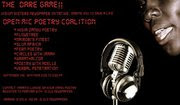
The dare game!!! on the 17th of September
Coming Together to Dare you to save a life!!!
THE NEWSPAPER INITIATIVE by VISION SISTERS in corporation with:
*Hisia Zangu Poetry
*Flowetree
*Nairobi's Finest
*Slam Africa
*Fern Poetry
*QalizaSanaa
*Circles with Immah
*Wamathai.com
*Poetry with Adelle
*Verbal Peneration
Here's what some of us have been asking;
"Is Turkana part of a country where the leaders refuse to pay taxes?" Joshua, 22
"How can I help?" Bella, 11
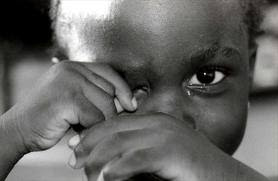
"I hate seeing children dying because of hunger, let us collect newspapers raise funds and help." Margaret, 26
Indeed let us come together to help our brothers and sisters. Highlighting a project started by two friends who are collecting old newspapers to help their country. I urge you to join our cause and help to collect old newspapers which will be sold and the proceeds go towards The Kenya Red Cross for the Kenyans for Kenya Initiative. We invite you to donate old newspapers from your organization or individually towards this initiative. The culmination will be an afternoon of Poetry, music and story narrations among other works of art on the 17th of September 2011 at the Strathmore University Auditorium.
Come for a show of open mic poetry, music, story narrations and other works of art.
The theme is DARE!!!!
Entrance: 200 bob and come with at least 5 old newspapers and/or anything else you think can help.......... and save a child, save a mother, save a father, save a generation! I dare you!
© Namatsi Lukoye
HISIA ZANGU-DARE is on SATURDAY the 17th SEPTEMBER at the STRATHMORE AUDITORIUM. Entrance Fee is 200Ksh or 20newspapers or more. Come and enjoy Poetry-fine, raw, refined. Enjoy African, Afrofusion, Jazz and even Genge/Kapuka and Dancehall. Make that date. All artists who wish to perform holla.
The dare game!!! on the 17th of September
Coming Together to Dare you to save a life!!!
THE NEWSPAPER INITIATIVE by VISION SISTERS in corporation with:
*Hisia Zangu Poetry
*Flowetree
*Nairobi's Finest
*Slam Africa
*Fern Poetry
*QalizaSanaa
*Circles with Immah
*Wamathai.com
*Poetry with Adelle
*Verbal Peneration
Here's what some of us have been asking;
"Is Turkana part of a country where the leaders refuse to pay taxes?" Joshua, 22
"How can I help?" Bella, 11
"I hate seeing children dying because of hunger, let us collect newspapers raise funds and help." Margaret, 26
Indeed let us come together to help our brothers and sisters. Highlighting a project started by two friends who are collecting old newspapers to help their country. I urge you to join our cause and help to collect old newspapers which will be sold and the proceeds go towards The Kenya Red Cross for the Kenyans for Kenya Initiative. We invite you to donate old newspapers from your organization or individually towards this initiative. The culmination will be an afternoon of Poetry, music and story narrations among other works of art on the 18th of September 2011 at the Strathmore University Auditorium.
Come for a show of open mic poetry, music, story narrations and other works of art.
The theme is DARE!!!!
Entrance: 200 bob and come with at least 5 old newspapers and/or anything else you think can help.......... and save a child, save a mother, save a father, save a generation! I dare you!
© Namatsi Lukoye
THE NEWSPAPER INITIATIVE by VISION SISTERS in corporation with:
*Hisia Zangu Poetry
*Flowetree
*Nairobi's Finest
*Slam Africa
*Fern Poetry
*QalizaSanaa
*Circles with Immah
*Wamathai.com
*Poetry with Adelle
*Verbal Peneration
Here's what some of us have been asking;
"Is Turkana part of a country where the leaders refuse to pay taxes?" Joshua, 22
"How can I help?" Bella, 11
"I hate seeing children dying because of hunger, let us collect newspapers raise funds and help." Margaret, 26
Indeed let us come together to help our brothers and sisters. Highlighting a project started by two friends who are collecting old newspapers to help their country. I urge you to join our cause and help to collect old newspapers which will be sold and the proceeds go towards The Kenya Red Cross for the Kenyans for Kenya Initiative. We invite you to donate old newspapers from your organization or individually towards this initiative. The culmination will be an afternoon of Poetry, music and story narrations among other works of art on the 18th of September 2011 at the Strathmore University Auditorium.
Come for a show of open mic poetry, music, story narrations and other works of art.
The theme is DARE!!!!
Entrance: 200 bob and come with at least 5 old newspapers and/or anything else you think can help.......... and save a child, save a mother, save a father, save a generation! I dare you!
© Namatsi Lukoye
origins of street poetry
Until the early 19th century, Grub Street was a street close to London's impoverished Moorfields district that ran from Fore Street east of St Giles-without-Cripplegate north to Chiswell Street. Famous for its concentration of impoverished 'hack writers', aspiring poets, and low-end publishers and booksellers, Grub Street existed on the margins of London's journalistic and literary scene. It was pierced along its length with narrow entrances to alleys and courts, many of which retained the names of early signboards. Its bohemian society was set amidst the impoverished neighbourhood's low-rent flophouses, brothels, and coffeehouses.
According to Samuel Johnson's Dictionary, the term was "originally the name of a street... much inhabited by writers of small histories, dictionaries, and temporary poems, whence any mean production is called grubstreet." Johnson himself had lived and worked on Grub Street early in his career. The contemporary image of Grub Street was popularised by Alexander Pope in his Dunciad.
The street name no longer exists, but Grub Street has since become a pejorative term for impoverished hack writers and writings of low literary value.
Contents
[hide] 1 Toponymy
2 History 2.1 Early history
2.2 Early literature
2.3 Press freedom
2.4 Hacks
2.5 Periodicals
2.6 Taxation
2.7 Infighting
2.8 Later history
3 Legacy
4 See also
5 References
6 Further reading
[edit] Toponymy
According to the Oxford English Dictionary the verb grub translates as "To dig superficially; to break up the surface of (the ground); to clear (ground) of roots and stumps." The earliest use of the word is in 1300, "Theif hus brecand, or gruband grund", and in 1572 "Ze suld your ground grube with simplicitie".[1] Grub Street appears to have taken its name from a refuse ditch that ran alongside (grub), and variations on the name include Grobstrat (1217–1243), Grobbestrate (1277–1278), Grubbestrate (1281), Grubbestrete (1298), Grubbelane (1336), Grubstrete, and Crobbestrate.[2][3][4] Grub is also a derogatory noun applied to 'a person of mean abilities, a literary hack; in recent use, a person of slovenly attire and unpleasant manners.'[5]
[edit] History
[edit] Early history
Henry Welby, engraving after William Marshall.
Grub Street was in Cripplegate ward, in the parish of St Giles-without-Cripplegate (Cripplegate ward was bisected by the city walls, and therefore was both 'within' and 'without').[6][7] Much of the area was originally extensive marshlands from the Fleet Ditch, to Bishopsgate, contiguous with Moorfields to the east.[8] The St Alphage Churchwardens' Accounts of 1267 mention a stream running from the nearby marsh, through Grub Street, and under the city walls into the Walbrook river, which may have provided the local population with drinking water,[9] however the marshes were drained in 1527.[10]
One of Grub Street's early residents was the notable recluse Henry Welby, the owner of the estate of Goxhill in Lincolnshire. In 1592 his half-brother attempted to shoot him with a pistol. Shocked, he took a house on Grub Street and remained there, in near-total seclusion, for the rest of his life. He died in 1636 and was buried at St Giles in Cripplegate.[11]
Grub Street, as recorded in John Rocque's 1746 map of London. Its path was partly within Cripplegate Ward, but outside the city walls of the City of London.
A late 18th-century illustration of a property on Sweedon's Passage, Grub Street
An early use of the land surrounding Grub Street was archery. In Records of St. Giles' Cripplegate (1883), the author describes an order made by Henry VII to convert Finsbury Fields from gardens, to fields for archery practice,[12] however in Elizabethan times archery became unfashionable, and Grub Street is described as largely deserted, "except for low gambling houses and bowling-alleys—or, as we should call them, skittle-grounds."[13] John Stow also referred to Grubstreete in A Survey of London Volume II (1603) as "It was convenient for bowyers, since it lay near the Archery-butts in Finsbury Fields", and in 1651 the poet Thomas Randoph wrote "Her eyes are Cupid's Grub-Street: the blind archer, Makes his love-arrows there."[14] The little London directory of 1677 lists six merchants living in 'GrubÅ¿reet', and Costermongers also plied their trade—a Mr Horton, who died in September 1773, earned a fortune of £2,000 by hiring wheelbarrows out.[15][16] Land was cheap and occupied mostly by the poor, and the area was renowned for the presence of Ague and the Black Death; in the 1660s the Great Plague of London killed nearly eight thousand of the parish's inhabitants.[8]
The population of St Giles in 1801 has been estimated at about 25,000 people, but by the end of the 19th century this was dropping steadily.[17] In the 18th century Cripplegate was well-known as an area haunted by insalubrious folk,[8] and by the mid 19th-century crime was rife. Methods of dealing with criminals were severe—thieves and murderers were "left dangling in their chains on Moorfields."[18] The use of gibbets was common, and four 'cages' were maintained by the parish, for use as a Lying-in hospital, housing the poor, and 'idle imposters'. One such cage stood amidst the poor quality housing stock of Grub Street;[18][19] destitution was viewed as a crime against society, and was punishable by whipping, and also by having a hole cut in the gristle of the right ear.[20]
Well before the influx of writers in the 18th century, Grub street was therefore in an economically deprived area.[4] John Garfield's Wandring Whore issue V (1660) lists several 'Crafty Bawds' operating from the Three Sugar-Loaves, and also mentions a Mrs Wroth as a 'common whore'.[21]
[edit] Early literature
The earliest literary reference to Grub Street appears in 1630, by the English poet, John Taylor. "When strait I might descry, The Quintescence of Grubstreet, well distild Through Cripplegate in a contagious Map".[22] The local population was known for its nonconformist views; its Presbyterian preacher Samuel Annesley had been replaced in 1662 by an Anglican. Famous 16th-century Puritans included John Foxe, who may have authored his Book of Martyrs in the area,[16] the historian John Speed, the Protestant printer and poet Robert Crowley. The Protestant John Milton also lived near Grub Street.[23]
[edit] Press freedom
In 1403 the City of London Corporation approved the formation of a Guild of stationers. Stationers were either booksellers, illuminators, or bookbinders.[24] Printing gradually displaced manuscript production, and by the time that the Guild received a royal charter of incorporation on May 4, 1557, becoming the Stationers' Company, it was in effect a Printers' Guild. In 1559, it became the 47th livery company.[citation needed]
The Stationers' Company had considerable powers of search and seizure, backed by the state (which supplied the force and authority to guarantee copyright). This monopoly continued until 1641 when, inflamed by the treatment of religious dissenters such as John Lilburne and William Prynne, the Long Parliament abolished the Star Chamber (a court which controlled the press) with the Habeas Corpus Act 1640. This led to the de facto cessation of state censorship of the press. Although in 1641 token punishments were given to those responsible for unlicensed and hostile pamphlets published around London—including Grub Street—Puritan and radical pamphlets continued to be distributed by an informal network of street hawkers, and dissenters from within the Stationers' Company.[23][25][26] Tabloid journalism[27] became rife; the unstable political climate resulted in the publication from Grub Street of anti-Caroline literature, along with blatant lies and anti-Catholic stories regarding the Irish Rebellion of 1641; stories that were advantageous to the parliamentary leadership. Following the King's failed attempt to arrest several members of the Commons, Grub Street printer Bernard Alsop became personally involved in the publication of false pamphlets, including a fake letter from the Queen that resulted in John Bond being pilloried. Alsop and colleague Thomas Fawcett were sent to Fleet Prison for several months.[28]
Throughout the English Civil War therefore, publishers and writers remained answerable to the law. State control of the press was tightened in the Licensing Order of 1643, but although the new regime was arguably as restrictive as the monopoly that the Stationers' Company once enjoyed, parliament was unable to control the number of renegade presses that flourished during the Interregnum.[29] The freedoms ensured by the Bill of Rights 1689 led indirectly to the refusal in 1695 of the Parliament of England to renew the Licensing of the Press Act 1662, a law which required all printing presses to be licensed by Parliament. This lapse led to a freer press, and a rise in the volume of printed matter. Jonathan Swift wrote to a friend in New York, "I could send you a great deal of news from the Republica Grubstreetaria, which was never in greater altitude."[30]
[edit] Hacks
A copy of The Grub Street Journal lies at the writer's feet, in William Hogarth's The Distrest Poet. Set in a garret, the print has been described as a study of a typical Grub Street writer.[31]
The Coffeehous Mob, frontispiece to Ned Ward's Vulgus Britannicus (1710). The fruits of the Grub Street publishers were read and debated in houses like this.[32]
Publishing houses proliferated in Grub Street, and this, combined with the number of local garrets, meant that the area was an ideal home for hack writers. In The Preface, when describing the harsh conditions a writer suffered, Tom Brown's self-parody referred to being "Block'd up in a Garret".[33] Such contemporary views of the writer, in his inexpensive Ivory Tower high above the noise of the city, were immortalised by William Hogarth in his 1736 illustration The Distrest Poet. The street name became a synonym for a hack writer; in a literary context, 'hack' is derived from Hackney—a person whose services may be for hire, especially a literary drudge.[34] In this framework, hack was popularised by authors such as Andrew Marvell,[35] Oliver Goldsmith,[36] John Wolcot,[37] and Anthony Trollope.[38] Ned Ward's late 17th-century description reinforces a common view of Grub Street authors, as little more than prostitutes:
The condition of an Author, is much like that of a Strumpet, ...and if the Reason by requir'd, Why we betake our selves to so Scandalous a Profession as Whoring or Pamphleteering, the same exusive [sic] Answer will serve us both, viz. That the unhappy circumstances of a Narrow Fortune, hath forc'd us to do that for our Subsistence, which we are much asham'd of.
—Ned Ward (1698), [39]
One such author was Samuel Boyse. Contemporary accounts picture him as a dishonest and disreputable rogue, paid for each individual line of prose as a Jack of all trades, master of none. He apparently lived in squalor, often drunk, and on one occasion after pawning his shirt, he fashioned a replacement out of paper.[40] To be a called a 'Grub Street author' was therefore often viewed as an insult,[35] however Grub Street hack James Ralph defended the trade of the journalist, contrasting it with the supposed hypocrisy of more esteemed professions:
A Man may plead for Money, prescribe for or quack for Money, preach and pray for Money, marry for Money, fight for Money, do anything within the Law for Money, provided the Expedient answers, without the least imputation. But if he writes like one inspired from Heaven, and writes for Money, the Man of Touch, in the right of Midas his great Ancestor, enters his caveat against him as a man of Taste; declares the two Provinces to be incompatible; that he who aims at Praise ought to be starved...[The author] is laugh'd at if poor; if to avoid that curse, he endeavours to turn his Wit to Profit, he is branded as a Mercenary.
—James Ralph (1758), [41]
[edit] Periodicals
In response to the newly increased demand for reading matter in the Augustan period, Grub Street became a popular source of periodical literature. One publication to take advantage of the reduction of state control was A Perfect Diurnall (despite its title, a weekly publication). However it quickly found its name copied by unscrupulous Grub Street publishers, so obviously that the newspaper was forced to issue a warning to its readers.[42] Toward the end of the 17th century authors such as John Dunton worked on a range of periodicals, including Pegasus (1696), and The Night Walker: or, Evening Rambles in search after lewd Women (1696–1697). Dunton pioneered the advice column in Athenian Mercury (1690–1697). The satirical writer and publican Ned Ward published The London Spy (1698–1700) in monthly instalments, for over a year and a half. It was conceived as a guide to the sights of the city, but as a periodical also contained details on taverns, coffee-houses, tobacco shops, and bagnios.[43]
Robert Walpole used Treasury funds to subsidise elements of the press that were sympathetic to the Whig government.[44]
Other publications included the Whig Observator (1702–1712), and the Tory Rehearsal (1704–1709), both superseded by Daniel Defoe's Weeky Review (1704–1713), and Jonathan Swift's Examiner (1710–1714).[45] English newspapers were often politically sponsored, and Grub Street was host to several such publications; between 1731 and 1741 Robert Walpole's ministry was reported to have spent about £50,077 (about £6.63 million today)[46] nationally of Treasury funds on bribes to such newspapers. Allegiances changed often, with some authors changing their political stance on receipt of bribes from secret service funds.[44] Such changes helped maintain the level of disdain with which the establishment viewed journalists and their trade, an attitude often reinforced by the abuse publications would print about their rivals. Titles such as Common Sense, Daily Post, and the Jacobite's Journal (1747–1748) were often guilty of this practice, and in May 1756 an anonymous author described journalists as "dastardly mongrel insects, scribbling incendiaries, starveling savages, human shaped tygers, senseless yelping curs..."[32] In describing his profession, Samuel Johnson, a Grub Street man himself,[47] said "A news-writer is a man without virtue who writes lies at home for his own profit. To these compositions is required neither genius nor knowledge, neither industry nor sprightliness, but contempt of shame and indifference to truth are absolutely necessary."[48][49]
The Province, or rather the States, of Grub-street, like those of Switzerland, never enter into any alliance offensive and defensive with any one contending power, against another; but wisely keep themselves in an exact neutrality. At the same time, their private members are ready to engage on either side for good pay, without ever inquiring into the merits of the cause.
—Grub Street Journal (1731), [44]
[edit] Taxation
In 1711 Queen Anne gave royal assent to the 1712 Stamp Act, which imposed new taxes on newspapers. The Queen addressed the House of Commons: "Her majesty finds it necessary to observe, how great license is taken in publishing false and scandalous libels, such as are a reproach to any Government. This evil seems to be grown too strong for the laws now in force. It is therefore recommended to you to find a remedy equal to the mischief."[50] The passage of the Act was partly an attempt to silence Whig pamphleteers and dissenters, who had been critical of the then Tory government. Every copy of a news-carrying publication printed on a half-sheet of paper became liable to a duty of a halfpenny, and if printed on a full sheet, a penny. A duty of a shilling was placed on advertisements. Pamphlets were charged a flate rate of two shillings per sheet for each edition, and were obliged to include the name and address of the printer.[51] The introduction of the Act caused protests from publishers and authors alike, including Daniel Defoe, and Jonathan Swift, who in support of the Whig press wrote:
Do you know that Grub Street is dead and gone last week? No more ghosts or murders now for love or money. I plied it pretty close the last fortnight and published at least seven penny papers of my own, besides some of other people's; but now every single half sheet pays a half penny to the queen. The Observator is fallen; the Medlays we jumbled together with the Flying Post, the Examiner is deadly sick; the Spectator keeps up and doubles its price; I know not how long it will hold. Have you seen the red stamp the papers are marked with? Methinks the stamping it is worth a half penny.
—Jonathan Swift (1712), [50][52]
Queen Anne
Although the Act had the unfortunate side-effect of closing down several newspapers, publishers used a weakness in the legislation which meant that newspapers of six pages (a half-sheet and a whole sheet) were only charged at the flat pamphlet rate of two shillings per sheet (regardless of the number of copies printed). Many publications thus expanded to six pages, filled the extra space with extraneous matter, and raised their prices to absorb the tax. Newspapers also used the extra space to introduce serials, hoping to hook readers into buying the next instalment. The periodical nature of the Newspaper allowed writers to develop their arguments over successive weeks, and the newspaper began to overtake the pamphlet as the primary medium for political news and comment.[53]
By the 1720s 'Grub Street' had grown from a simple street name, to a term used to describe all manner of low-level publishing.[54] The popularity of Nathaniel Mist's Weekly Journal gave rise to a plethora of new publications, including the Universal Spectator (1728), the Anglican Weekly Miscellany (1732), the Old Whig (1735), Common Sense (1737), and the Westminster Journal.[55] Such publications could be strident in their criticism of government ministers—Common Sense in 1737 compared Walpole to the infamous outlaw Dick Turpin:
Must not a Foreigner laugh to hear the whole Nation exclaiming every Day in the publick News Papers [sic] against the Depredations of one pitiful Fellow, one of very mean Rank and Qualifications, every Way contemptible? — What must they think of a Nation who quietly permits such a Wretch as this to carry on a successful Series of impudent Robberies, which every one knows, every one exclaims against, and yet every one submits to.
—Common Sense (1737), [56]
In response, a 1737 edition of the Craftsman proposed a tax on urine, and ten years later the Westminster Journal, in a critique of proposed new taxes on food, servants, and malt, proposed a tax on human excrement.[57] Not all publications were based entirely on politics however; the Grub Street Journal was better known in literary circles for its combative nature, and has been compared to the modern-day Private Eye. Despite its name, it was printed on nearby Warwick Lane. It began in 1730 as a literary journal and became known for its bellicose writings on individual authors. It is considered by some to have been a vehicle for Alexander Pope's attacks on his enemies in Grub Street, but although he contributed to early issues the full extent of his involvement is unknown. Once his interest in the publication waned The Journal began to generalise, satirising medicine, theology, theatre, justice, and other social issues. It often contained contradictory accounts of events reported by the previous week's newspapers, its writers inserting sarcastic remarks on the inaccuracies printed by their rivals.[58] It ran until 1737 when it became the Literary Courier of Grub-street, which lingered for a further six months before vanishing altogether.[59]
Grub Street printer John Entick's successful legal battle against the executive power of the state was an influential factor in the Fourth Amendment to the United States Constitution.
Newspapers and their authors were not yet completely free from state control. In 1763 John Wilkes was charged with seditious libel for his attacks on a speech by George III, in issue 45 of The North Briton. The King felt personally insulted and general warrants were issued for the arrest of Wilkes and the newspaper's publishers. He was arrested, convicted of libel, fined, and imprisoned. During their search for Wilkes, the king's messengers had visited the home of a Grub Street printer named John Entick. Entick had printed several copies of The North Briton, but not number 45. The messengers spent four hours searching his home, and eventually carried away more than two hundred unrelated charts and pamphlets. Wilkes had filed for damages against the Under Secretary of State Robert Woods and won his case, and two years later Entick pursued the chief messenger Nicholas Carrington in similar fashion—and was awarded £2,000 in compensation. Carrington appealed, but was ultimately unsuccessful; Chief Justice Camden upheld the verdict with a landmark judgement that established the limits of executive power in English law, that an officer of the state could only act lawfully in a manner prescribed by statute or common law.[60][61] The judgement also formed part of the background to the Fourth Amendment to the United States Constitution.[62]
[edit] Infighting
A front cover of The Gentleman's Magazine, which started in 1731. The first of its kind, it was started by Edward Cave from his office at St John's Gate.[63][64]
In 1716 the bookseller and publisher Edmund Curll acquired a manuscript that belonged to Alexander Pope. Curll advertised the work as part of a forthcoming volume of poetry, and was soon contacted by Pope who warned him not to publish the poems. Curll ignored him and published Pope's work under the title Court Poems. A meeting between the two was arranged, at which Pope poisoned Curll with an emetic. Several days later he also published two pamphlets describing the meeting, and proclaimed Curll's death. Pope hoped that the combination of the poisoning and the wit of his writing would change the public view of Curll from a victim, to a deserving villain. Meanwhile, Curll responded by publishing material critical of Pope and his religion. The incident, meant to secure Pope's status as an elevated figure amongst his peers, created a lifelong and bitter rivalry between the two men, but may have been beneficial to both; Pope as the man of letters under constant attack from the hacks of Grub Street, and Curll using the incident to increase the profits from his business.[65]
Pope later immortalised Grub Street in his 1728 poem The Dunciad, a satire of "the Grub-street Race" of commercial writers.[66] Such infighting was not unusual, but a particularly notable episode occurred from 1752–1753, when Henry Fielding started a "paper war" against hack writers on Grub Street. Fielding had worked in Grub Street during the late 1730s. His career as a dramatist was curtailed by the Theatrical Licensing Act (provoked by Fielding's anti-Walpole satire such as Tom Thumb and Covent Garden Tragedy) and he turned to law, supporting his income with normal Grub Street work. He also launched The Champion, and over the following years edited several newspapers, including from 1752–1754 The Covent-Garden Journal.[67] The "war" spanned many of London's publications, and resulted in countless essays, poems, and even a series of mock epic poems starting with Christopher Smart's The Hilliad (a pun on Pope's Dunciad). Although it is not clear what started the dispute, it resulted in a divide of authors who either supported Fielding or Hill, and few in between.
The avariciousness of the Grub Street press was often demonstrated in the manner in which they treated notable, or notorious public figures. John Church, an independent minister born in 1780, raised the ire of the local hacks when he admitted he had acted 'imprudently' following allegations he had sodomised young men in his congregation.[68] Satire was a popular pastime—the Mary Toft affair of 1726, concerning a woman who fooled some of the medical establishment into believing she had given birth to rabbits—produced a notable dirge of diaries, letters, satiric poems, ballads, false confessions, cartoons, and pamphlets.[69]
[edit] Later history
Grub Street was renamed as Milton Street in 1830, apparently in memory of a tradesman who owned the building lease of the street.[3] By the middle of the 19th century it had lost some of its negative connotations; authors were by that time viewed in the same light as traditionally more esteemed professions,[35] although 'Grub Street' remained a metaphor for the commercial production of printed matter, regardless of whether such matter actually originated from Grub Street itself.[citation needed]
Writer George Augustus Henry Sala said that during his years as a Grub Street 'hack',"...most of us were about the idlest young dogs that squandered away their time on the pavements of Paris or London. We would not work. I declare in all candour that...the average number of hours per week which I devoted to literary production did not exceed four." (Cross, 94)[70][71]
Although the street no longer exists in name (modern construction has changed much of the area), the name continues to exist in modern use.[citation needed] Much of the area was destroyed by enemy bombing in World War II, and has since been replaced by the Barbican Estate.[72][73] Milton Street borders the City of London's Brewery Conservation Area.[10]
[edit] Legacy
As Grub Street became a metaphor for the commercial production of printed matter, it gradually found use in early 18th-century America. Early publications such as handwritten ditties and squibs were circulated among the gentry and taverns and coffee-houses. As in England, many were directed at politicians of the day.[74]
According to Samuel Johnson's Dictionary, the term was "originally the name of a street... much inhabited by writers of small histories, dictionaries, and temporary poems, whence any mean production is called grubstreet." Johnson himself had lived and worked on Grub Street early in his career. The contemporary image of Grub Street was popularised by Alexander Pope in his Dunciad.
The street name no longer exists, but Grub Street has since become a pejorative term for impoverished hack writers and writings of low literary value.
Contents
[hide] 1 Toponymy
2 History 2.1 Early history
2.2 Early literature
2.3 Press freedom
2.4 Hacks
2.5 Periodicals
2.6 Taxation
2.7 Infighting
2.8 Later history
3 Legacy
4 See also
5 References
6 Further reading
[edit] Toponymy
According to the Oxford English Dictionary the verb grub translates as "To dig superficially; to break up the surface of (the ground); to clear (ground) of roots and stumps." The earliest use of the word is in 1300, "Theif hus brecand, or gruband grund", and in 1572 "Ze suld your ground grube with simplicitie".[1] Grub Street appears to have taken its name from a refuse ditch that ran alongside (grub), and variations on the name include Grobstrat (1217–1243), Grobbestrate (1277–1278), Grubbestrate (1281), Grubbestrete (1298), Grubbelane (1336), Grubstrete, and Crobbestrate.[2][3][4] Grub is also a derogatory noun applied to 'a person of mean abilities, a literary hack; in recent use, a person of slovenly attire and unpleasant manners.'[5]
[edit] History
[edit] Early history
Henry Welby, engraving after William Marshall.
Grub Street was in Cripplegate ward, in the parish of St Giles-without-Cripplegate (Cripplegate ward was bisected by the city walls, and therefore was both 'within' and 'without').[6][7] Much of the area was originally extensive marshlands from the Fleet Ditch, to Bishopsgate, contiguous with Moorfields to the east.[8] The St Alphage Churchwardens' Accounts of 1267 mention a stream running from the nearby marsh, through Grub Street, and under the city walls into the Walbrook river, which may have provided the local population with drinking water,[9] however the marshes were drained in 1527.[10]
One of Grub Street's early residents was the notable recluse Henry Welby, the owner of the estate of Goxhill in Lincolnshire. In 1592 his half-brother attempted to shoot him with a pistol. Shocked, he took a house on Grub Street and remained there, in near-total seclusion, for the rest of his life. He died in 1636 and was buried at St Giles in Cripplegate.[11]
Grub Street, as recorded in John Rocque's 1746 map of London. Its path was partly within Cripplegate Ward, but outside the city walls of the City of London.
A late 18th-century illustration of a property on Sweedon's Passage, Grub Street
An early use of the land surrounding Grub Street was archery. In Records of St. Giles' Cripplegate (1883), the author describes an order made by Henry VII to convert Finsbury Fields from gardens, to fields for archery practice,[12] however in Elizabethan times archery became unfashionable, and Grub Street is described as largely deserted, "except for low gambling houses and bowling-alleys—or, as we should call them, skittle-grounds."[13] John Stow also referred to Grubstreete in A Survey of London Volume II (1603) as "It was convenient for bowyers, since it lay near the Archery-butts in Finsbury Fields", and in 1651 the poet Thomas Randoph wrote "Her eyes are Cupid's Grub-Street: the blind archer, Makes his love-arrows there."[14] The little London directory of 1677 lists six merchants living in 'GrubÅ¿reet', and Costermongers also plied their trade—a Mr Horton, who died in September 1773, earned a fortune of £2,000 by hiring wheelbarrows out.[15][16] Land was cheap and occupied mostly by the poor, and the area was renowned for the presence of Ague and the Black Death; in the 1660s the Great Plague of London killed nearly eight thousand of the parish's inhabitants.[8]
The population of St Giles in 1801 has been estimated at about 25,000 people, but by the end of the 19th century this was dropping steadily.[17] In the 18th century Cripplegate was well-known as an area haunted by insalubrious folk,[8] and by the mid 19th-century crime was rife. Methods of dealing with criminals were severe—thieves and murderers were "left dangling in their chains on Moorfields."[18] The use of gibbets was common, and four 'cages' were maintained by the parish, for use as a Lying-in hospital, housing the poor, and 'idle imposters'. One such cage stood amidst the poor quality housing stock of Grub Street;[18][19] destitution was viewed as a crime against society, and was punishable by whipping, and also by having a hole cut in the gristle of the right ear.[20]
Well before the influx of writers in the 18th century, Grub street was therefore in an economically deprived area.[4] John Garfield's Wandring Whore issue V (1660) lists several 'Crafty Bawds' operating from the Three Sugar-Loaves, and also mentions a Mrs Wroth as a 'common whore'.[21]
[edit] Early literature
The earliest literary reference to Grub Street appears in 1630, by the English poet, John Taylor. "When strait I might descry, The Quintescence of Grubstreet, well distild Through Cripplegate in a contagious Map".[22] The local population was known for its nonconformist views; its Presbyterian preacher Samuel Annesley had been replaced in 1662 by an Anglican. Famous 16th-century Puritans included John Foxe, who may have authored his Book of Martyrs in the area,[16] the historian John Speed, the Protestant printer and poet Robert Crowley. The Protestant John Milton also lived near Grub Street.[23]
[edit] Press freedom
In 1403 the City of London Corporation approved the formation of a Guild of stationers. Stationers were either booksellers, illuminators, or bookbinders.[24] Printing gradually displaced manuscript production, and by the time that the Guild received a royal charter of incorporation on May 4, 1557, becoming the Stationers' Company, it was in effect a Printers' Guild. In 1559, it became the 47th livery company.[citation needed]
The Stationers' Company had considerable powers of search and seizure, backed by the state (which supplied the force and authority to guarantee copyright). This monopoly continued until 1641 when, inflamed by the treatment of religious dissenters such as John Lilburne and William Prynne, the Long Parliament abolished the Star Chamber (a court which controlled the press) with the Habeas Corpus Act 1640. This led to the de facto cessation of state censorship of the press. Although in 1641 token punishments were given to those responsible for unlicensed and hostile pamphlets published around London—including Grub Street—Puritan and radical pamphlets continued to be distributed by an informal network of street hawkers, and dissenters from within the Stationers' Company.[23][25][26] Tabloid journalism[27] became rife; the unstable political climate resulted in the publication from Grub Street of anti-Caroline literature, along with blatant lies and anti-Catholic stories regarding the Irish Rebellion of 1641; stories that were advantageous to the parliamentary leadership. Following the King's failed attempt to arrest several members of the Commons, Grub Street printer Bernard Alsop became personally involved in the publication of false pamphlets, including a fake letter from the Queen that resulted in John Bond being pilloried. Alsop and colleague Thomas Fawcett were sent to Fleet Prison for several months.[28]
Throughout the English Civil War therefore, publishers and writers remained answerable to the law. State control of the press was tightened in the Licensing Order of 1643, but although the new regime was arguably as restrictive as the monopoly that the Stationers' Company once enjoyed, parliament was unable to control the number of renegade presses that flourished during the Interregnum.[29] The freedoms ensured by the Bill of Rights 1689 led indirectly to the refusal in 1695 of the Parliament of England to renew the Licensing of the Press Act 1662, a law which required all printing presses to be licensed by Parliament. This lapse led to a freer press, and a rise in the volume of printed matter. Jonathan Swift wrote to a friend in New York, "I could send you a great deal of news from the Republica Grubstreetaria, which was never in greater altitude."[30]
[edit] Hacks
A copy of The Grub Street Journal lies at the writer's feet, in William Hogarth's The Distrest Poet. Set in a garret, the print has been described as a study of a typical Grub Street writer.[31]
The Coffeehous Mob, frontispiece to Ned Ward's Vulgus Britannicus (1710). The fruits of the Grub Street publishers were read and debated in houses like this.[32]
Publishing houses proliferated in Grub Street, and this, combined with the number of local garrets, meant that the area was an ideal home for hack writers. In The Preface, when describing the harsh conditions a writer suffered, Tom Brown's self-parody referred to being "Block'd up in a Garret".[33] Such contemporary views of the writer, in his inexpensive Ivory Tower high above the noise of the city, were immortalised by William Hogarth in his 1736 illustration The Distrest Poet. The street name became a synonym for a hack writer; in a literary context, 'hack' is derived from Hackney—a person whose services may be for hire, especially a literary drudge.[34] In this framework, hack was popularised by authors such as Andrew Marvell,[35] Oliver Goldsmith,[36] John Wolcot,[37] and Anthony Trollope.[38] Ned Ward's late 17th-century description reinforces a common view of Grub Street authors, as little more than prostitutes:
The condition of an Author, is much like that of a Strumpet, ...and if the Reason by requir'd, Why we betake our selves to so Scandalous a Profession as Whoring or Pamphleteering, the same exusive [sic] Answer will serve us both, viz. That the unhappy circumstances of a Narrow Fortune, hath forc'd us to do that for our Subsistence, which we are much asham'd of.
—Ned Ward (1698), [39]
One such author was Samuel Boyse. Contemporary accounts picture him as a dishonest and disreputable rogue, paid for each individual line of prose as a Jack of all trades, master of none. He apparently lived in squalor, often drunk, and on one occasion after pawning his shirt, he fashioned a replacement out of paper.[40] To be a called a 'Grub Street author' was therefore often viewed as an insult,[35] however Grub Street hack James Ralph defended the trade of the journalist, contrasting it with the supposed hypocrisy of more esteemed professions:
A Man may plead for Money, prescribe for or quack for Money, preach and pray for Money, marry for Money, fight for Money, do anything within the Law for Money, provided the Expedient answers, without the least imputation. But if he writes like one inspired from Heaven, and writes for Money, the Man of Touch, in the right of Midas his great Ancestor, enters his caveat against him as a man of Taste; declares the two Provinces to be incompatible; that he who aims at Praise ought to be starved...[The author] is laugh'd at if poor; if to avoid that curse, he endeavours to turn his Wit to Profit, he is branded as a Mercenary.
—James Ralph (1758), [41]
[edit] Periodicals
In response to the newly increased demand for reading matter in the Augustan period, Grub Street became a popular source of periodical literature. One publication to take advantage of the reduction of state control was A Perfect Diurnall (despite its title, a weekly publication). However it quickly found its name copied by unscrupulous Grub Street publishers, so obviously that the newspaper was forced to issue a warning to its readers.[42] Toward the end of the 17th century authors such as John Dunton worked on a range of periodicals, including Pegasus (1696), and The Night Walker: or, Evening Rambles in search after lewd Women (1696–1697). Dunton pioneered the advice column in Athenian Mercury (1690–1697). The satirical writer and publican Ned Ward published The London Spy (1698–1700) in monthly instalments, for over a year and a half. It was conceived as a guide to the sights of the city, but as a periodical also contained details on taverns, coffee-houses, tobacco shops, and bagnios.[43]
Robert Walpole used Treasury funds to subsidise elements of the press that were sympathetic to the Whig government.[44]
Other publications included the Whig Observator (1702–1712), and the Tory Rehearsal (1704–1709), both superseded by Daniel Defoe's Weeky Review (1704–1713), and Jonathan Swift's Examiner (1710–1714).[45] English newspapers were often politically sponsored, and Grub Street was host to several such publications; between 1731 and 1741 Robert Walpole's ministry was reported to have spent about £50,077 (about £6.63 million today)[46] nationally of Treasury funds on bribes to such newspapers. Allegiances changed often, with some authors changing their political stance on receipt of bribes from secret service funds.[44] Such changes helped maintain the level of disdain with which the establishment viewed journalists and their trade, an attitude often reinforced by the abuse publications would print about their rivals. Titles such as Common Sense, Daily Post, and the Jacobite's Journal (1747–1748) were often guilty of this practice, and in May 1756 an anonymous author described journalists as "dastardly mongrel insects, scribbling incendiaries, starveling savages, human shaped tygers, senseless yelping curs..."[32] In describing his profession, Samuel Johnson, a Grub Street man himself,[47] said "A news-writer is a man without virtue who writes lies at home for his own profit. To these compositions is required neither genius nor knowledge, neither industry nor sprightliness, but contempt of shame and indifference to truth are absolutely necessary."[48][49]
The Province, or rather the States, of Grub-street, like those of Switzerland, never enter into any alliance offensive and defensive with any one contending power, against another; but wisely keep themselves in an exact neutrality. At the same time, their private members are ready to engage on either side for good pay, without ever inquiring into the merits of the cause.
—Grub Street Journal (1731), [44]
[edit] Taxation
In 1711 Queen Anne gave royal assent to the 1712 Stamp Act, which imposed new taxes on newspapers. The Queen addressed the House of Commons: "Her majesty finds it necessary to observe, how great license is taken in publishing false and scandalous libels, such as are a reproach to any Government. This evil seems to be grown too strong for the laws now in force. It is therefore recommended to you to find a remedy equal to the mischief."[50] The passage of the Act was partly an attempt to silence Whig pamphleteers and dissenters, who had been critical of the then Tory government. Every copy of a news-carrying publication printed on a half-sheet of paper became liable to a duty of a halfpenny, and if printed on a full sheet, a penny. A duty of a shilling was placed on advertisements. Pamphlets were charged a flate rate of two shillings per sheet for each edition, and were obliged to include the name and address of the printer.[51] The introduction of the Act caused protests from publishers and authors alike, including Daniel Defoe, and Jonathan Swift, who in support of the Whig press wrote:
Do you know that Grub Street is dead and gone last week? No more ghosts or murders now for love or money. I plied it pretty close the last fortnight and published at least seven penny papers of my own, besides some of other people's; but now every single half sheet pays a half penny to the queen. The Observator is fallen; the Medlays we jumbled together with the Flying Post, the Examiner is deadly sick; the Spectator keeps up and doubles its price; I know not how long it will hold. Have you seen the red stamp the papers are marked with? Methinks the stamping it is worth a half penny.
—Jonathan Swift (1712), [50][52]
Queen Anne
Although the Act had the unfortunate side-effect of closing down several newspapers, publishers used a weakness in the legislation which meant that newspapers of six pages (a half-sheet and a whole sheet) were only charged at the flat pamphlet rate of two shillings per sheet (regardless of the number of copies printed). Many publications thus expanded to six pages, filled the extra space with extraneous matter, and raised their prices to absorb the tax. Newspapers also used the extra space to introduce serials, hoping to hook readers into buying the next instalment. The periodical nature of the Newspaper allowed writers to develop their arguments over successive weeks, and the newspaper began to overtake the pamphlet as the primary medium for political news and comment.[53]
By the 1720s 'Grub Street' had grown from a simple street name, to a term used to describe all manner of low-level publishing.[54] The popularity of Nathaniel Mist's Weekly Journal gave rise to a plethora of new publications, including the Universal Spectator (1728), the Anglican Weekly Miscellany (1732), the Old Whig (1735), Common Sense (1737), and the Westminster Journal.[55] Such publications could be strident in their criticism of government ministers—Common Sense in 1737 compared Walpole to the infamous outlaw Dick Turpin:
Must not a Foreigner laugh to hear the whole Nation exclaiming every Day in the publick News Papers [sic] against the Depredations of one pitiful Fellow, one of very mean Rank and Qualifications, every Way contemptible? — What must they think of a Nation who quietly permits such a Wretch as this to carry on a successful Series of impudent Robberies, which every one knows, every one exclaims against, and yet every one submits to.
—Common Sense (1737), [56]
In response, a 1737 edition of the Craftsman proposed a tax on urine, and ten years later the Westminster Journal, in a critique of proposed new taxes on food, servants, and malt, proposed a tax on human excrement.[57] Not all publications were based entirely on politics however; the Grub Street Journal was better known in literary circles for its combative nature, and has been compared to the modern-day Private Eye. Despite its name, it was printed on nearby Warwick Lane. It began in 1730 as a literary journal and became known for its bellicose writings on individual authors. It is considered by some to have been a vehicle for Alexander Pope's attacks on his enemies in Grub Street, but although he contributed to early issues the full extent of his involvement is unknown. Once his interest in the publication waned The Journal began to generalise, satirising medicine, theology, theatre, justice, and other social issues. It often contained contradictory accounts of events reported by the previous week's newspapers, its writers inserting sarcastic remarks on the inaccuracies printed by their rivals.[58] It ran until 1737 when it became the Literary Courier of Grub-street, which lingered for a further six months before vanishing altogether.[59]
Grub Street printer John Entick's successful legal battle against the executive power of the state was an influential factor in the Fourth Amendment to the United States Constitution.
Newspapers and their authors were not yet completely free from state control. In 1763 John Wilkes was charged with seditious libel for his attacks on a speech by George III, in issue 45 of The North Briton. The King felt personally insulted and general warrants were issued for the arrest of Wilkes and the newspaper's publishers. He was arrested, convicted of libel, fined, and imprisoned. During their search for Wilkes, the king's messengers had visited the home of a Grub Street printer named John Entick. Entick had printed several copies of The North Briton, but not number 45. The messengers spent four hours searching his home, and eventually carried away more than two hundred unrelated charts and pamphlets. Wilkes had filed for damages against the Under Secretary of State Robert Woods and won his case, and two years later Entick pursued the chief messenger Nicholas Carrington in similar fashion—and was awarded £2,000 in compensation. Carrington appealed, but was ultimately unsuccessful; Chief Justice Camden upheld the verdict with a landmark judgement that established the limits of executive power in English law, that an officer of the state could only act lawfully in a manner prescribed by statute or common law.[60][61] The judgement also formed part of the background to the Fourth Amendment to the United States Constitution.[62]
[edit] Infighting
A front cover of The Gentleman's Magazine, which started in 1731. The first of its kind, it was started by Edward Cave from his office at St John's Gate.[63][64]
In 1716 the bookseller and publisher Edmund Curll acquired a manuscript that belonged to Alexander Pope. Curll advertised the work as part of a forthcoming volume of poetry, and was soon contacted by Pope who warned him not to publish the poems. Curll ignored him and published Pope's work under the title Court Poems. A meeting between the two was arranged, at which Pope poisoned Curll with an emetic. Several days later he also published two pamphlets describing the meeting, and proclaimed Curll's death. Pope hoped that the combination of the poisoning and the wit of his writing would change the public view of Curll from a victim, to a deserving villain. Meanwhile, Curll responded by publishing material critical of Pope and his religion. The incident, meant to secure Pope's status as an elevated figure amongst his peers, created a lifelong and bitter rivalry between the two men, but may have been beneficial to both; Pope as the man of letters under constant attack from the hacks of Grub Street, and Curll using the incident to increase the profits from his business.[65]
Pope later immortalised Grub Street in his 1728 poem The Dunciad, a satire of "the Grub-street Race" of commercial writers.[66] Such infighting was not unusual, but a particularly notable episode occurred from 1752–1753, when Henry Fielding started a "paper war" against hack writers on Grub Street. Fielding had worked in Grub Street during the late 1730s. His career as a dramatist was curtailed by the Theatrical Licensing Act (provoked by Fielding's anti-Walpole satire such as Tom Thumb and Covent Garden Tragedy) and he turned to law, supporting his income with normal Grub Street work. He also launched The Champion, and over the following years edited several newspapers, including from 1752–1754 The Covent-Garden Journal.[67] The "war" spanned many of London's publications, and resulted in countless essays, poems, and even a series of mock epic poems starting with Christopher Smart's The Hilliad (a pun on Pope's Dunciad). Although it is not clear what started the dispute, it resulted in a divide of authors who either supported Fielding or Hill, and few in between.
The avariciousness of the Grub Street press was often demonstrated in the manner in which they treated notable, or notorious public figures. John Church, an independent minister born in 1780, raised the ire of the local hacks when he admitted he had acted 'imprudently' following allegations he had sodomised young men in his congregation.[68] Satire was a popular pastime—the Mary Toft affair of 1726, concerning a woman who fooled some of the medical establishment into believing she had given birth to rabbits—produced a notable dirge of diaries, letters, satiric poems, ballads, false confessions, cartoons, and pamphlets.[69]
[edit] Later history
Grub Street was renamed as Milton Street in 1830, apparently in memory of a tradesman who owned the building lease of the street.[3] By the middle of the 19th century it had lost some of its negative connotations; authors were by that time viewed in the same light as traditionally more esteemed professions,[35] although 'Grub Street' remained a metaphor for the commercial production of printed matter, regardless of whether such matter actually originated from Grub Street itself.[citation needed]
Writer George Augustus Henry Sala said that during his years as a Grub Street 'hack',"...most of us were about the idlest young dogs that squandered away their time on the pavements of Paris or London. We would not work. I declare in all candour that...the average number of hours per week which I devoted to literary production did not exceed four." (Cross, 94)[70][71]
Although the street no longer exists in name (modern construction has changed much of the area), the name continues to exist in modern use.[citation needed] Much of the area was destroyed by enemy bombing in World War II, and has since been replaced by the Barbican Estate.[72][73] Milton Street borders the City of London's Brewery Conservation Area.[10]
[edit] Legacy
As Grub Street became a metaphor for the commercial production of printed matter, it gradually found use in early 18th-century America. Early publications such as handwritten ditties and squibs were circulated among the gentry and taverns and coffee-houses. As in England, many were directed at politicians of the day.[74]
Subscribe to:
Posts (Atom)